12 Pastel Tile Wall Seamless Patterns: A Practical Review of the Tile Tones Collection
In the landscape of digital design assets, seamless patterns remain a foundational element for creating scalable backgrounds, textures, and thematic elements. Among the various aesthetic trends that have emerged, pastel tile designs offer a distinct blend of retro charm and modern minimalism. The 12 Pastel Tile Wall Seamless Patterns, part of the "Tile Tones" collection, presents a curated set of digital papers designed to meet this specific visual demand. This review evaluates the technical specifications, aesthetic qualities, and practical applications of this collection, providing a clear assessment for designers, entrepreneurs, and content creators.
Understanding the Product Specifications
Before assessing the creative utility of any asset, it is essential to understand the technical framework that supports its use. The 12 Pastel Tile Wall Seamless Patterns are not merely low-resolution images; they are constructed with professional-grade parameters intended for high-quality output. Each pattern in the collection is provided as a JPEG file, ensuring broad compatibility across various design software platforms, from Adobe Creative Cloud to Canva and Procreate.
The resolution is a critical factor in determining the viability of these patterns for print versus web use. These digital papers are sized at 3600 x 3600 pixels with a resolution of 300 dpi (dots per inch). This specification is significant because it allows for printing at physical dimensions of approximately 12 x 12 inches without loss of clarity. For sublimation projects, which often require larger continuous prints, users may need to stitch multiple instances together, but the high pixel count ensures that individual tiles do not appear pixelated or blurry when scaled up moderately. The format being JPEG rather than PNG means there is no transparency layer, which simplifies layering in some workflows but requires careful consideration when placing the pattern over other background colors.
Aesthetic Analysis: The "Tile Tones" Palette
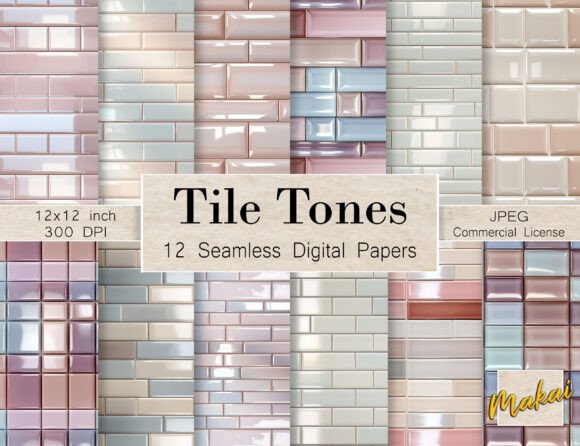
The defining characteristic of this collection is its color strategy. As the name suggests, the patterns focus on a palette of soft pinks, blues, and creams. This selection aligns with contemporary interior design trends that favor calming, neutral, yet visually interesting environments. The term "glossy charm" used in the product description refers to the visual treatment of the tiles themselves. Unlike flat matte illustrations, these patterns simulate a slight sheen or reflection, giving the walls depth and realism.
This glossy effect is achieved through subtle shading and highlight variations within the tile geometry. It prevents the pattern from looking like a simple two-color checkerboard, instead offering a three-dimensional appearance that mimics real ceramic or subway tiling. The inclusion of twelve distinct variations provides enough variety to prevent monotony while maintaining a cohesive brand identity if used across multiple projects. The mix of solid pastels and potentially varied grout lines (depending on the specific pattern variant) allows for nuanced textural differences between each of the twelve files.
Practical Applications and Use Cases
The versatility of the 12 Pastel Tile Wall Seamless Patterns makes them suitable for a wide range of commercial and personal projects. Below is an analysis of where these assets perform best.
Sublimation and Print-on-Demand
One of the most robust applications for these patterns is in sublimation printing. Because the patterns are seamless, they can be tiled infinitely, making them ideal for all-over-print designs on apparel, home decor items like throw pillows, and accessories. The 300 dpi resolution ensures that the final printed product retains sharpness, which is crucial for customer satisfaction in the print-on-demand industry. The pastel color scheme is particularly popular in spring and summer collections, targeting demographics interested in cottagecore, minimalist, or Scandinavian-inspired aesthetics.
Digital Stationery and Planners
For educators and small business owners creating digital products, such as iPad planners, printable journals, or social media templates, these patterns offer a clean, professional backdrop. The glossy tile texture adds visual interest without overwhelming the text or functional elements placed on top. The soft color palette ensures that black or dark gray text remains highly legible, reducing eye strain for users. The 12 x 12 inch size is also compatible with standard scrapbooking layouts, both physical and digital.
Fabric and Textile Design
While fabric printing often requires vector-based EPS or AI files to allow for infinite scaling without quality loss, raster JPEGs like these can still be effective for smaller batch productions or direct-to-garment printing where the pattern repeat is managed carefully. The seamless nature of the files means that designers can easily create repeat swatches to check for alignment errors before committing to production runs.
Web and UI Backgrounds
In the realm of web design, using high-resolution seamless patterns as full-width backgrounds can enhance user experience by adding texture to otherwise flat interfaces. However, due to the large file size inherent in 3600x3600 pixel JPEGs, designers should optimize these images for web delivery (e.g., compressing for faster load times) when using them online. They are less suited for mobile-first designs where data efficiency is paramount, but excellent for desktop landing pages or blog headers.
Evaluating Quality and Usability
When evaluating the usability of the 12 Pastel Tile Wall Seamless Patterns, consistency is key. In seamless pattern collections, the primary point of failure is often the edge alignment. If the left edge does not perfectly match the right edge, or the top with the bottom, the pattern will show visible seams when tiled. Based on the professional construction standards implied by the 300 dpi/3600px specification, these files are likely generated using automated tiling algorithms that ensure perfect continuity. This reliability saves designers significant time in pre-production testing.
The presentation of the files—straightforward JPEGs—means there is no learning curve regarding file formats. Users do not need specialized plugins to view or edit them. However, the lack of vector data means that individual tiles cannot be easily recolored or reshaped within the pattern structure without using advanced image editing techniques. For users who require customizable colors, this might be a limitation. For those who want ready-to-use, aesthetically pleasing backgrounds, this simplicity is a strength.
Target Audience and Strategic Fit
This collection is particularly well-suited for:
- Small Business Owners: Those selling handmade goods, stickers, or digital downloads on platforms like Etsy or Shopify.
- Freelance Graphic Designers: Professionals looking to add quick, high-quality textures to client mockups or branding materials.
- Blogger and Content Creators: Individuals seeking consistent visual themes for their websites or YouTube thumbnails.
- Educators: Teachers creating engaging, visually appealing classroom materials or digital worksheets.
Conversely, industrial designers working on architectural visualization might find these patterns too stylized or "cute" for realistic renderings, preferring more muted, concrete-like textures. Similarly, developers building high-performance web apps might find the raster format inefficient compared to CSS-generated gradients or SVG patterns.
Limitations and Considerations
While the 12 Pastel Tile Wall Seamless Patterns offer strong value, potential users should consider a few limitations. First, the JPEG format does not support transparency. If a designer wants to overlay the tile pattern on a colored background to tint the overall look, they must rely on blending modes in their software, as the pattern itself is opaque. Second, the fixed pastel palette may not align with every brand’s color guidelines. Brands with bold, saturated primary colors may find the soft pinks and blues too subdued for their needs.
Additionally, while 3600 pixels is sufficient for many print jobs, it is not infinite. For very large format prints, such as billboards or wall murals spanning several meters, the pattern would need to be repeated many times, potentially revealing minor artifacts if the source image lacks sufficient detail density. However, for standard consumer goods and digital media, this resolution is more than adequate.
Final Verdict
The "Tile Tones" collection of 12 Pastel Tile Wall Seamless Patterns represents a solid, well-executed resource for creatives. It strikes a balance between aesthetic appeal and technical reliability. The glossy, pastel tile design taps into current design trends without being overly trendy, ensuring longevity in usage. The technical specs—300 dpi, 3600x3600 pixels, and JPEG format—make it accessible and versatile for both print and digital applications. For professionals and hobbyists alike who need reliable, beautiful background textures, this collection offers good value and immediate usability. It is a practical tool that enhances workflow efficiency by providing ready-made, high-quality assets that require minimal post-processing.