Plaid Gingham Seamless Paper Patterns: A Practical Guide to Integration and Workflow Efficiency
In the realm of digital design, scrapbooking, and content creation, the distinction between a functional asset and a transformative one often comes down to texture and pattern. Plaid Gingham Seamless Paper Patterns represent more than just a decorative element; they are a foundational tool for creators who value consistency, scalability, and professional-grade output. Whether you are a small business owner preparing sublimation prints, a blogger designing custom headers, or an educator creating classroom materials, understanding how to effectively utilize these digital assets can streamline your production process significantly.
This article explores the practical application of Plaid Gingham Seamless Paper Patterns, focusing on their technical specifications, integration into various creative workflows, and strategies for maintaining quality control across projects. By treating these patterns as modular components in a broader design system, users can achieve greater efficiency and visual cohesion.
Understanding the Asset: Technical Specifications and Quality Control
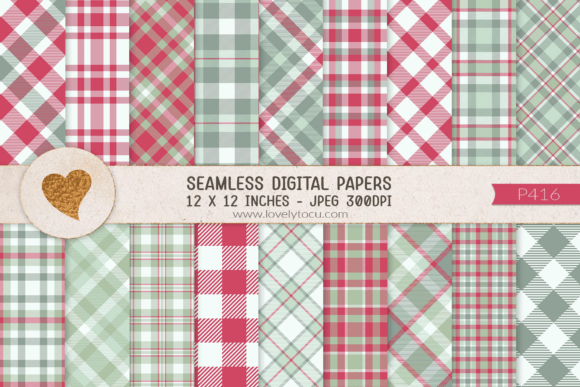
Before integrating any digital asset into a workflow, it is essential to verify its technical compatibility. The Plaid Gingham Seamless Paper Patterns collection is engineered for high-fidelity reproduction, ensuring that the final output meets professional standards. The package includes 18 seamless papers, each designed to tile infinitely without visible seams or interruptions. This feature is critical for large-format projects where repeating patterns might otherwise create distracting artifacts.
The files are provided in JPG file format, a widely supported standard that ensures compatibility with almost all major design software, including Adobe Photoshop, Illustrator, Canva, Affinity Designer, and free alternatives like GIMP or Inkscape. While vector formats (like SVG or EPS) offer infinite scalability, JPGs provide a balance of file size manageability and universal accessibility, making them ideal for rapid deployment in busy workflows.
Each paper is specified at 12×12″ resolution at 300dpi. This specification is the industry gold standard for print media. At 300 dots per inch (dpi), the image retains sharpness and clarity even when viewed up close, which is vital for physical products such as greeting cards, party invitations, or fabric prints. For digital-only applications, such as website backgrounds or social media graphics, this resolution provides ample detail, though designers may choose to downsample the images for faster loading times without sacrificing perceptible quality.
Why Resolution Matters in Your Workflow
Working with 300dpi assets eliminates the need for constant resizing during the pre-production phase. When you start with a high-resolution source, you have the flexibility to scale elements up or down within your design canvas without introducing pixelation. This reduces the number of iterations required, saving time and reducing cognitive load. For entrepreneurs and freelancers, time is a direct cost; minimizing back-and-forth adjustments translates directly to higher profit margins and faster turnaround times for clients.
Integration into Creative and Business Workflows
The versatility of Plaid Gingham Seamless Paper Patterns allows them to serve multiple roles across different stages of a project lifecycle. Below are specific use cases that demonstrate how these assets fit into real-world processes.
Scrapbooking and Junk Journal Design
For hobbyists and independent publishers, digital scrapbooking has become a lucrative niche. The "junk journal" aesthetic, characterized by layered textures, vintage vibes, and tactile appearances, relies heavily on background patterns. Plaid gingham offers a classic, timeless look that pairs well with botanical illustrations, handwritten fonts, and distressed overlays.
- Preparation Phase: Import the 18 JPG files into a dedicated asset library. Organize them by color palette or intensity to facilitate quick retrieval during the layout phase.
- Execution Phase: Use the seamless property to create full-page backgrounds. Overlay transparent PNGs of ephemera (tags, tickets, stamps) to add depth. The seamless nature ensures that if you crop the page, the edges will still align perfectly if the user flips through the pages.
- Output: Export at 300dpi for printing or lower dpi for screen viewing, depending on the delivery platform.
Sublimation and Print-on-Demand
Entrepreneurs running print-on-demand businesses must ensure that their designs are ready for mass production. Sublimation printing requires high-resolution, seamless patterns to avoid visible grid lines on t-shirts, mugs, or tote bags. The 12×12″ size is easily scalable to larger dimensions required for apparel, provided the aspect ratio is maintained.
To integrate this into your supply chain workflow:
- Mockup Creation: Use the patterns as base layers in mockup generators. This allows you to visualize how the plaid interacts with product shapes before committing to inventory.
- Color Matching: Since JPGs use RGB color space, always convert your final design to CMYK if sending to a professional printer, or rely on your POD provider’s color profiles to ensure brand consistency.
- Batch Processing: If creating multiple variations, use the same pattern but alter the hue or saturation. This maintains brand identity while offering variety to customers.
Digital Marketing and Blogging
Content creators and marketers often struggle with maintaining visual consistency across blog posts, email newsletters, and social media campaigns. Using Plaid Gingham Seamless Paper Patterns as branded backgrounds can unify your visual identity. Unlike solid colors, textured backgrounds add sophistication and readability contrast when paired with white text boxes or semi-transparent overlays.
For example, a marketer could use a subtle gingham pattern as a footer background for an email newsletter, reinforcing brand recognition every time the recipient opens the message. The key here is subtlety; the pattern should enhance the content, not compete with it.
Best Practices for Organization and Long-Term Use
Acquiring high-quality assets is only half the battle. To maximize the return on investment from purchasing Plaid Gingham Seamless Paper Patterns, creators must implement robust organizational systems.
Asset Management
Store your downloaded JPGs in a structured directory system. Avoid dumping files into a generic "Downloads" folder. Instead, create a hierarchy such as:
- /Design_Assets/Textures/Gingham_Plaid_18Pack
- /Design_Assets/Textures/Gingham_Plaid_18Pack/High_Res_300dpi
- /Design_Assets/Textures/Gingham_Plaid_18Pack/Low_Res_Web
Creating a low-resolution web version involves downsampling the original 300dpi files to 72dpi or 96dpi. This reduces file size by approximately 90%, leading to faster page loads for websites and easier sharing via email or cloud storage. Keep both versions accessible to suit different project needs.
Consistency and Branding
When using these patterns for commercial purposes, consider how they align with your overall brand palette. Plaid gingham typically features primary or pastel colors. Ensure that the specific hues in the 18-pack complement your existing brand colors. If they clash, use editing tools to adjust the color balance. This attention to detail signals professionalism to clients and customers.
Troubleshooting Common Implementation Issues
Even with high-quality assets, integration challenges can arise. Here are common issues and their solutions:
- Visible Seams: If you notice faint lines where the pattern repeats, check your software’s tiling settings. In Photoshop, ensure the layer style "Pattern Overlay" is set to "Scale" rather than "Actual Size," or manually offset the layer by half its width to break up the repetition.
- Color Banding: On some monitors, gradients in the gingham pattern may appear banded. This is often a display issue, but you can mitigate it by adding a slight noise filter (1-2%) to the layer. This breaks up uniform color blocks and mimics the texture of physical paper.
- File Compatibility: While JPG is universal, some older vector-based software may struggle with large raster images. In such cases, import the JPG as a smart object or embedded link to preserve editability and performance.
Conclusion
Plaid Gingham Seamless Paper Patterns are a versatile, high-quality resource that can elevate the visual appeal of diverse projects, from personal scrapbooks to commercial print-on-demand goods. By understanding their technical specifications—specifically the 12×12″ size, 300dpi resolution, and JPG format—creators can integrate them seamlessly into their workflows. Proper organization, attention to color consistency, and awareness of troubleshooting techniques ensure that these assets deliver maximum value over time. For professionals and hobbyists alike, leveraging these patterns effectively is a small step that results in significant gains in productivity and aesthetic quality.